The Streets is the recording name of rapper/songwriter/producer
Mike Skinner, a native of Birmingham,
England. The
Streets' first album,
Original Pirate
Material, appeared in 2002 to much acclaim from fans and critics worldwide.
Featuring a straightforward, conversational rapping style, infectious homemade
beats and engrossing yet relatable subject matter,
Original Pirate Material marked the arrival of a major new talent
in hip hop and led many critics to proclaim Skinner the voice of British youth.
The follow-up album,
A Grand Don't Come
for Free, brought Skinner even greater praise, landing spots on many
critics' best-of lists for 2004.
With the release of the Streets' third full-length, The Hardest Way to Make an Easy Living,
Skinner took a moment to talk with Ticketmaster about the new album, performing
live and a few of his other musical projects.
TM: In the U.S., many
of your fans don't listen to a lot of hip hop. They're more interested in rock
and indie bands. Why do you think these rock fans have responded so positively
to your music?
MS: I think America,
and rap in general, is so much about a lifestyle. The beats and the rhymes can
be kind of irrelevant. It's more just about a certain section of society. It's
similar in England, but I
think in England
that section of society is me. I think it's true of all British rap that's
gonna come over here for now. It's going to be more for people that are looking
to experiment with music.
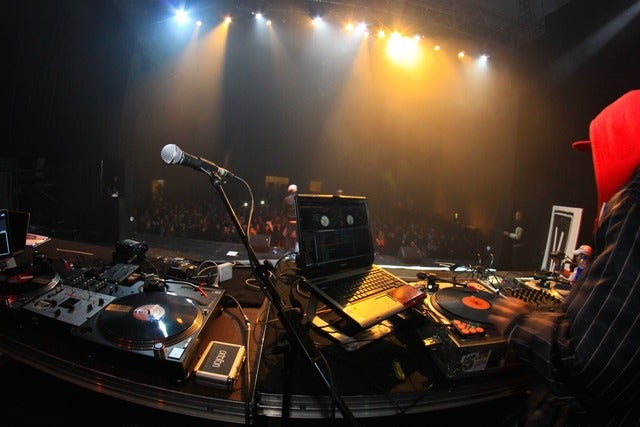
TM: How do you
approach playing live? What kind of experience do you hope to give your
audience?null
MS: Well, again, it's quite different outside of England. In the
U.K.,
it's pretty crazy. We break bar records wherever we go. I suppose it's like Girls Gone Wild mixed with Beastie Boys
or something. Early Beastie Boys. It depends on the audience to be honest. If
the audience wants to cause trouble, we'll happily help them. (laughs)
TM: Do you have a
favorite place to play live?
MS: My favorite venue in the world has got to be the Glasgow
Barrowland in Scotland.
It's quite a wide gig, but it's not a huge capacity. In terms of where the
people are when you're on stage, there's a kind of width to the audience. And
the Glasgow
crowd is just the most loony crowd on Earth. Combine that with the fact that it
is so British what we're doing, it seems to connect. It's always the best gig
on any tour that we do. On the last tour that we did—because it's quite big in England
now—we did arenas and stuff. But I think on the next tour that I do, I'm going to
do arenas, and then when I get to Glasgow,
I want to do like four Barrowland shows straight in a row. That's how much I
love the venue.
TM: What's your most
memorable onstage moment?
MS: Probably when I was in Manchester once. I was singing one of our sad
songs, called "It's Too Late" from the first album. Someone threw a full can of
lager at me and it hit me. I kind of turned into it on accident. I was looking
behind me and I turned around and I just got pelted fully in the face by this
can. Knowing how to take a blow onstage like that, I think that's the
definition of true stagecraft. And to carry on with a song, it's difficult. It's
actually quite funny. It didn't really make me angry. I thought that I would be angry. You should
have told me someone was going to throw a can. I thought I would've reacted
really badly. But I think because we were actually trying to get them to throw
stuff in the first place, you can't really blame them. (laughs)
TM: Tell me about the
Beats record label you've started.null
MS: We've been going on for about a year now. There's a big
culture in England
at the moment for low budget music videos. Both on mobile phone downloads...and
on TV channels. It's a very specific thing to urban culture. It's a grime
thing, a rap thing. So we're kind of in the middle of that to be honest. We do
a lot of remixes with other MCs and they get played on the TV and kids download
them. So that's a big part of our business. But we've also got the Mitchell
Brothers whose album has been in the wraps for a while. That was the first
thing we did. We've also got a kid called Professor Green. He came in second in
the hip hop battling championships in the Bahamas. He's got his thing going
on. We've also got a guy called Example. He's a bit like me I suppose, but he's
a bit more London.
So there's quite a lot going on. It's the main thing in my life, even though the
Streets is really big. Because the Streets is at a point now where everyone
knows their roles. It kind of runs itself from a management point of view. It's
quite a simple operation to keep going. So what I'm really excited by is all
the stuff going on with my label.
TM: When did you
first know you wanted to be a recording artist?
MS: Probably since I was about seven or something. My dad
got me a keyboard at some point. I was recording Run DMC stuff onto tape
recorders. I really have been doing it as long as I can remember. But I suppose
the moment that I knew that it was this or nothing was probably when I was
finishing school when I was about 15.null
TM: When you were a
teen, you built a little recording studio in your cupboard. What was the setup
like?null
MS: That was what I used to record the first record. It
works quite well actually, as long as you have a good microphone to record
with. The next most important thing is getting the sound of the room right. You
do that by trying to remove any reflections coming off the walls. You either use
mattresses or record in a cupboard surrounded by clothes.null
TM: You have a great
ability to tell stories through your music. Many people have even compared you
to famous novelists like Fyodor Dostoevsky. Do you read fiction or have any
favorite authors?null
MS: No, not really. I don't really read a lot. I tend to
kind of get it all from songs. I'm really into songwriting. I mean, everything
from rap music to Jimmy Webb and the stuff he did for Glen Campbell, or Johnny
Cash or Kris Kristofferson songs. I suppose a lot of American songwriting
greats, and rap music and Jamaican music as well. I get the rhythm to my words
from rap music.null
TM: Are there any new
musicians or bands you're really excited about?
MS: I really like the Arctic Monkeys. Who else? I've been
lucky enough that in England
the people that I'm excited by, I've been able to sign them. I really do look up
to the Mitchell Brothers, Professor Green and Example.
TM: Who do you like
to see live?null
MS: I really like seeing Kenny Rogers live actually. He's
like at true pro, you know. You can see that he's been doing it for years.