We're sorry, we're unable to process your request. Please try again.
|
To edit your Favorites or customize your e-mail preferences, go to My Ticketmaster.
By signing up, you may receive e-mails directly from the artist's representatives as well as from Ticketmaster.
If you are under 13 years old, you must not fill in this form or provide any information about yourself. Privacy Policy.
Do more, see more with My Ticketmaster.
Placeholder
Alternative Rock
CAKE Tickets
You're in the loop for CAKE! We'll email you before tickets go on sale in your area.
Have more than just one favorite artist? Let My Ticketmaster keep track of all of them for you.
Has your taste changed? Use My Ticketmaster to find some new favorites!
Add to Favorites
End of Add to Favorites simulated dialog content.
CAKE Tickets and Concert Dates
Biography
Short Biography
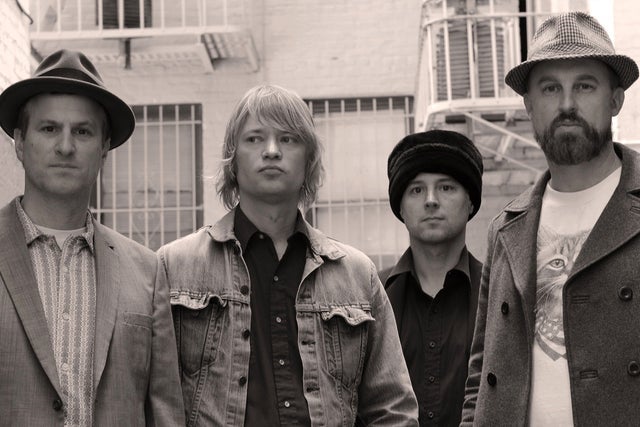
Producing a bevy of pop-rock tunes that are as catchy and danceable as they are witty, well-crafted and self-effacing (just check out the video for "Short Skirt/Long Jacket")—is, needless to say, not a piece of cake. That is, unless you are CAKE, the quartet from Sacramento whose songs have earned them critical praise as well as a steady, devoted fan following since the release of their self-produced 1994 debut Motorcade of Generosity. Thirteen years later and the band is still going strong with a rarities album as well as a new studio album in the works under their own, newly-created label. Lead singer and songwriter John McCrea recently spoke with Ticketmaster about...
Short Biography
Producing a bevy of pop-rock tunes that are as catchy and danceable as they are witty, well-crafted and self-effacing (just check out the video for "Short Skirt/Long Jacket")—is, needless to say, not a piece of cake. That is, unless you are CAKE, the quartet from Sacramento whose songs have earned them critical praise as well as a steady, devoted fan following since the release of their self-produced 1994 debut Motorcade of Generosity. Thirteen years later and the band is still going strong with a rarities album as well as a new studio album in the works under their own, newly-created label. Lead singer and songwriter John McCrea recently spoke with Ticketmaster about Rarities and B-Sides, the forthcoming album of original music, their current tour and the importance of trusting your instincts.
Ticketmaster: So how did you know that it was time to release a Rarities album?
John McCrea: Well, it's kind of good timing for us in that we're not with Columbia anymore, so it's good in that way. The economies of scale have changed in the music industry, so the old frameworks don't really work as the sales of recorded music are decimated every year, so it's better to not have so much overhead.
TM: I see. So it made economic sense?
JM: Yeah, but also we were surprised that it made sense in terms of music as well. Once we put it together we did some remixing and remastering and tried to really make an album out of it, and it ended up working I think, if we can say so ourselves, quite well musically. Not that anyone cares about albums anymore, but it seems to be an album.
TM: So is that how you went about selecting the tracks for the album? You found tracks that were, sort of, cohesive in theme?
JM: Yeah, pretty much. I wouldn't say it was a Yes album, or prog-rock album, but there are some recurring themes and, musically, it seems to hold together. What I always ask myself when I listen to albums by other people, or even our albums, is "Do I feel like hearing this next song?"—do I feel it viscerally, mostly. And a lot of times the answer is no. I think a lot of mistakes are made in terms of album sequencing.
TM: When you're not trusting your gut?
JM: Yeah. And you can extend that to the entirety of your life, actually.
TM: True. So can you reveal to us some songs that almost made the cut - or maybe some that almost didn't make it?
JM: There were some live songs that were interesting, but we wanted to keep it mostly studio recordings. There were some good songs, some really good performances that didn't make it on, but we could always release something else someday.
TM: And why did you choose to put scratch and sniff scents on the packaging?
JM: Well, as a kid I was always thrilled by the stranger scent combinations, but, you know, it just seems like a good visceral thing to do with CDs. If you're going to make a CD, if you're gonna use physical materials to put music out, you may as well play with the fact that it is a visceral medium in a world where that is disappearing.
TM: Engage all the senses.
JM: Right, right.
TM: On this album, you've included covers of Frank Sinatra, Barry White, Buck Owens, George Jones, Ozzy Osborne, and Kenny Rogers—which is about as eclectic an artist list as you can get! How have you chosen your cover songs over the years and what are the main challenges posed?
JM: Again, it's more of on a visceral level that we choose things. I think we chose songs that we thought we would enjoy playing ourselves and then if they sounded good, well then other people would enjoy listening to them. There was no grand scheme. I mean, there was a grand scheme overall with this band not kowtowing to musical fashion trends. The songs on the album are probably the most unfashionable songs you could choose, but we think fashion is just effete and wasteful overall. I think that extends from music to just about all kinds of fashion. I'm not sure that the earth can support this s*** much longer.
TM: I empathize. You've got a highly anticipated album of new music coming out in 2008 on your own label, Upbeat Records. First off, what precipitated the decision to form the label?
JM: It's something that we'd been thinking about for years. Five or six years ago we couldn't do it ourselves. We didn't have the energy. So much about the music industry has always been about mass, and we didn't feel like we had that critical mass wherein we could adequately release and promote an album properly. And we may have been able to do it back then but we just settled for the conventional wisdom at the time. We'd seen other people at the time who were more commercially successful than us who were flushed down the toilet trying to go independent and release their own music. So we decided to hold off. We could have stayed on Columbia, but we had the opportunity to weasel our way out and it seemed like the right thing to do for us. The culture of larger record labels...well, we didn't really feel at home in that culture. Not to be judgmental, it's just that it's a different kind of aesthetic. And we started out as a very do-it-yourself sort of band. We did everything. With the first album, we released it ourselves, did all the artwork and videos and produced ourselves. Even engineered a lot of our own stuff. We've kind of gone back to that aesthetic with this album and it feels quite natural, frankly.
TM: Can you give us a hint as to what to expect stylewise from the album?
JM: Well, we're not a band that likes to make gratuitous departures. We feel like the important thing is to take it on a song-by-song basis, to let each song be king of its own world. And to say "oh, yeah, we're gonna do a soft jazz album" or "we're gonna sound like 1972 Brooklyn," that's not something that we feel like doing. So it's hard to answer that question. We owe our primary fealty to the song. If there's something that we fetish-ize, it's the song, not the wrapper.
TM: Again, it's back to the visceral. Going by instinct.
JM: Yeah, yeah. And I think a lot of things are made to subvert that instinctual process. You could subvert the integrity or identity of a song by prioritizing the album over the song. Or you could go bigger—you could prioritize the band's career direction. But nothing should be more important than that one moment of that one song. And I think that people think about it too much and they think "we're gonna make it sound just like garage rock from 1968." It's an amazing time we live in right now, and I'm actually quite floored by the accuracy of the sort of wax museum of stylistic variations. I've never experienced anything like this in my life, listening to something and thinking "is this a real song from 1973?"
TM: Yes, the real self-conscious imitation in music now.
JM: Yeah, like the fake ‘80s music is amazing.
TM: Are you treating fans to a lot of new music on your current tour?
JM: Umm. Well we'll do a song here and there from the rarities album if we feel like it. We don't use a setlist, so there's really nothing guaranteed. As we're playing the song, we ask ourselves what we feel like playing next, and we play that song next. Sometimes we end up just playing mostly songs from one of our five albums and then after the show realize that we shouldn't have done that! But we also have a better time playing live than people who are slaves to the setlist.
TM: So what's the most amazing live performance you've ever attended, and why was it so memorable?
JM: There are a couple of them...I got to see Frank Sinatra before he died play at a casino in Reno, Nevada. And I was going through a tough time in my life at that point and he really lifted me out of it. He was inspiring because he was fighting a cold and you just wouldn't know it. He was a real professional. And when people question his importance...you know, he was an artist. An artist of phrasing. That's something that's a very important but invisible art form. He was able to enliven songs with the right sort of emphasis.
TM: He was a true consummate performer.
JM: Yeah.
TM: Alright, so before we wrap up, I'd like you to talk a little about your website which has a sort of activist element throughout it. In fact, your news section contains far more social and political news than it does news about CAKE. It seems like there's a deliberate attempt to take the focus off of the band—is that a fair statement?
JM: Well, I like talking about subjects. And I don't know that musicians are that interesting of a subject. I think musicians serve the culture and not the other way around. So, yeah, I mean we talk about things that we think are weird, and I don't think we think of it as an activist site...it's more...well, maybe it's an activist site in a more passive-aggressive way...but we try not to be overly didactic. But we have fun with it and I think it's a website that we (the band) enjoy probably more than anyone else does!
In-depth Biography
Best-known for their ubiquitous hit "The Distance," Cake epitomized the postmodern, irony-drenched aesthetic of ‘90s geek-rock. Their sound freely mixed and matched pastiches of widely varying genres -- white-boy funk, hip-hop, country, new wave pop, jazz, college rock, and guitar rock -- with a particular delight in the clashes that resulted. Their songs were filled with lyrical non sequiturs, pop-culture references, and smirky satire, all delivered with bone-dry detachment by speak-singing frontman John McCrea. Cake's music most frequently earned comparisons to Soul Coughing and King Missile, but lacked the downtown New York artiness of those two predecessors; instead, Cake cultivated an image of average guys with no illusions or pretensions about their role as entertainers. At the same time, critics lambasted what they saw as a smugly superior attitude behind the band's habitual sarcasm. Perhaps there was something in Cake's doggedly spare, low-key presentation that amplified their ironic detachment even when they didn't intend it, but most reviewers pegged them as one-hit wonders after the success of "The Distance." Nonetheless, Cake managed a few more alternative-radio hits in the years that followed, while retaining largely the same approach. Cake was formed in Sacramento, California in 1992 by vocalist/songwriter John McCrea, who'd recently returned home after spending a few years in Los Angeles, unsuccessfully trying to break into the music business. The original lineup of Cake also featured guitarist Greg Brown, trumpeter Vince DiFiore, bassist Sean McFessel, and drummer Frank French; McFessel soon left to attend college, and was replaced by Gabe Nelson. In 1993, the band released their debut single, "Rock ‘n' Roll Lifestyle," on a local basis, and followed it with a self-produced, self-released, self-distributed album, Motorcade of Generosity. Motorcade found its way to the revived Capricorn label, which released the album nationally after Cake signed a contract with them. With the prospect of extensive national touring, both Gabe Nelson and Frank French left the band, and were replaced by bassist Victor Damiani and drummer Todd Roper. Re-released by Capricorn, "Rock ‘n' Roll Lifestyle" caught on at college radio in 1995, and was followed by two more singles, "Ruby Sees All," and "Jolene" (not the Dolly Parton song). Cake's second album, Fashion Nugget, was released in 1996 and spawned a breakout smash in the Greg Brown-penned "The Distance," which dominated alternative radio that fall, and even turned into an unlikely sporting-event anthem. Mostly on the strength of "The Distance," Fashion Nugget charted in the Top 40 and sold over a million copies. It also spun off a somewhat controversial follow-up single in a cover of Gloria Gaynor's "I Will Survive"; although the band professed its sincere admiration for the song, some critics and listeners took it as a smarmy put down, in part because of McCrea's dead pan vocals. In 1997, Greg Brown and Victor Damiani both left Cake and formed a new group, the new wave-influenced Deathray, which eventually released its debut album on Capricorn in 2000. Meanwhile, McCrea briefly considered putting Cake to rest, but brought original bassist Gabe Nelson back to replace Damiani. For Cake's next album, McCrea used a tag-team procession of guitarists -- five in all -- on different tracks; the result, Prolonging the Magic, was released in 1998. True to its sardonic title, it defied critical opinion to produce another big alternative-radio hit in "Never There," plus decently successful follow-ups in "Sheep Go to Heaven" and "Let Go." Prolonging the Magic sold nearly as well as Fashion Nugget, and was also certified platinum. For the supporting tour, one of the album's guitarists, Xan McCurdy, officially joined Cake full-time. In the spring of 2000, Cake signed a new deal with Columbia, and debuted in 2001 with their fourth overall album, Comfort Eagle, which became their highest-charting yet (at Number 13). The lead single "Short Skirt/Long Jacket" was a hit on alternative radio, and even earned some MTV airplay -- no longer an easy task for any artist -- with a video that featured reactions to the song by randomly selected people on the street. Following the completion of the album, drummer Todd Roper left the group to spend more time with his children, and was replaced on the supporting tour by Pete McNeal. Pressure Chief appeared in 2004. Redefining the meaning of independant, the band was by now recording in a studio powered entirely by solar energy, and free of the corporate involvement of even so much as a power bill, released Showroom of Compassion some six years later in 2011. ~ Steve Huey & Steve Leggett, Rovi
Latest Tour News
Cake expands "Showroom of Compassion" trek
Published Sep 22,2011 12:43 PM / Tara HallAlt-rockers Cake have added a third leg of U.S. shows to their fall and winter itinerary in continued support of their chart-topping new album, "Showroom of Compassion." Read More Tour News »