Short Biography
Gloria Trevi ofrecerá un espectacular y explosivo concierto en el Auditorio Nacional
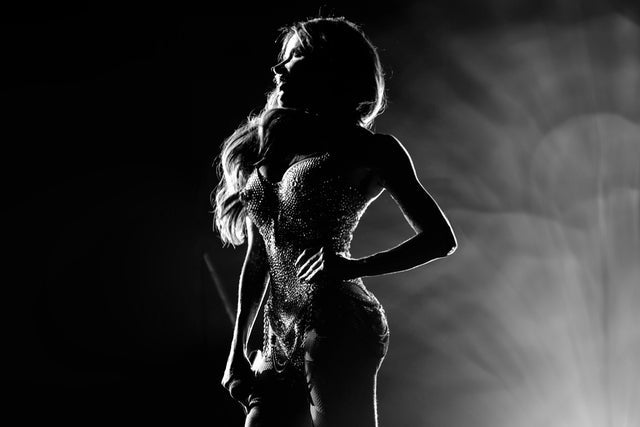
La regiomontana ofrecerá una velada explosiva y fuera de serie, que sin duda desatará la euforia de sus fans. Este concierto de la intérprete de Zapatos Viejos, forma parte de su Gira Rosa Blue.
Actualmente, Gloria Trevi sigue en la promoción de su disco Rosa Blue, que se ha posicionado entre los mejores en su género, además de estar nominado para el Grammy Latino, ha sido reconocido en los prestigiados Premios Oye! en la que está nominada en dos categorías Mejor vocalista femenina y Mejor canción del año por Cinco minutos, tema que también ocupa el lugar #3 de la lista Billboard de Estados Unidos.
Con el disco Rosa Blue, Gloria adquirió su consolidación en el mundo de la música, con los temas Psicofonía, Pruébamelo, Lo que una chica por amor es capaz, Inmaculada, La vida se va y Cinco Minutos, entre otras.
A la par de su éxito Rosa Blue, la Trevi participó en el programa más importante en la televisión mexicana, El Show de los Sueños, en el que apoyó a la familia Arredondo, y que le dio la oportunidad de demostrar su talento como cantante y en la ejecución de otras disciplinas como el baile.
En su espectáculo Rosa Blue, La Trevi ha preparado lo mejor de su historia musical, en los que destacan las melodías Dr. Psiquiatra, Tu ángel de la guarda, Zapatos viejos, Con los ojos cerrados, Me siento tan sola, Los Borregos, La acera de enfrente, Pelo Suelto, Agarrate, La papa sin cátsup, El recuento de los daños, Todos me miran y Cinco minutos, entre muchas otras,
Gloria nació en Monterrey y desde muy pequeña demostró pasión y talento por las artes plásticas, el canto y el baile. Durante su adolescencia, formó parte del grupo Boquitas Pintadas, sin embargo sólo duró año y medio. Más tarde decidió convertirse en solista.
En 1989 cambió su identidad para convertirse en Gloria Trevi. Su primer Álbum Que hago aquí, tuvo un gran éxito por el tema Dr Psiquiatra que invadió las pistas de baile. En 1991, salió al mercado Tu Angel de la Guarda, según la crítica el disco más importante de la carrera, pues el sencillo Pelo suelto inspiró la filmación de su primera cinta.
Después lanzó las placas musicales, Me siento tan sola, Más turbada que nunca y Si me llevas contigo. Para entonces había llegado a la cima de la popularidad y filmó dos películas más Zapatos viejos y Papa Sin cátsup. Más salieron al mercado De pelos, Lo Mejor de Gloria Trevi, No soy monedita de oro, Rock del Milenio y Recuento de los Daños.
In-depth Biography
Often hailed as "the Mexican Madonna," Gloria Trevi was not only one of the most daring and cutting-edge Latin stars of the ‘80s and ‘90s -- she was also one of the most important due to her sometimes sociopolitical music, which could be quite challenging and provocative.
Trevi was born Gloria de los Angeles Treviño on February 15, 1970 in Monterrey, Mexico. Growing up, Trevi was not only interested in Latin music -- she was seriously into American and British rock and listened to Led Zeppelin, the Doors, Deep Purple, Pat Benatar, and Janis Joplin (among others) extensively. Against her mother's wishes, Trevi left home when she was only 12 and moved from Monterrey to Mexico City to pursue a career in the arts. At first, life in Mexico City was a struggle for Trevi, who survived by doing everything from singing on the streets for money to selling tacos; she also taught aerobics for a while.
After briefly singing with the all-female group Boquitas Pintadas in the mid-‘80s, Trevi became a full-time solo artist and recorded her debut solo album, Qué Hago Aqui?, in 1989. Released on an independent Mexican label, that album and its lead single, "Dr. Psiquiatra" (which made it to number one on the Latin charts), were a smash -- and in 1990, Trevi landed a deal with RCA/BMG's Latin division. By 1993 she had sold more than five million albums overall. The Mexican Madonna was selling out large venues all over Latin America, where she embraced mostly Spanish-language material but also performed covers of songs by Zeppelin, the Doors, and other English-speaking rockers on-stage. Between her albums, live performances, and racy pinup calendars (which sold millions of copies), someone who had been dirt poor as a child had become one of Mexico's wealthiest, most affluent and famous women.
In the early ‘90s, Trevi was extremely controversial. The thing that made her so shocking to social conservatives in Mexico and other Latin American countries was her image -- an image as defiantly and blatantly sexual as Prince or Madonna. Like Madonna and Prince, Trevi promoted sexual freedom in a very in-your-face way. Trevi wasn't the only female artist of Mexican descent who was often compared to Madonna in the ‘90s; the late Tejano star Selena (a bilingual Chicana from Texas) was also described as one of Madonna's Mexican counterparts. But Selena, for all her sex appeal, was never as controversial or over the top as Trevi, whose live performances went out of their way to shock, taunt, and offend social conservatives. Trevi's antics included wearing a bandolier of condoms across her bare chest and bringing young male fans on-stage so that she could strip them down to their underwear.
But there was more to Trevi than shock value and titillation -- much, much more. Her material often had a decidedly feminist outlook, and she brought a sociopolitical perspective to topics like drugs, out-of-wedlock pregnancies, and abortion. Upsetting social conservatives was exactly what Trevi set out to do; in many respects, she was the Mexican equivalent of a riot grrrl. Some Latino journalists have compared her to Irish agitator Sinéad O'Connor -- a very outspoken feminist -- and Trevi was often quoted as saying that she hoped to run for president of Mexico someday. In fact, one of her pinup calendars depicted her as a nude presidential candidate.
Más Turbada Que Nunca, released in 1994, became her fourth consecutive album to top the charts in Mexico, and two tracks hit the top of the Latin charts in America ("El Recuento de los Daños" and the title track to a film, "La Papa Sin Catsup"). Si Me Llevas Contigo was released the following year. In 2004, her sixth full album, Cómo Nace el Universo, became a big hit in both Mexico and the U.S., where it eventually reached platinum status. The live album La Trayectoria followed in 2007, as did another studio effort, Una Rosa Blu, which became her first to crack Billboard's Top 200. The self-titled Gloria followed in 2011. ~ Alex Henderson, Rovi
See Less