
Great show! Great venue!
by Candy on 7/26/22TD Pavilion at the Mann - PhiladelphiaThere were plenty of seating at The Mann. Three people would have come had you not said there were no seats.
There are no upcoming events in United States
Don't worry, there are other events available below
Venue
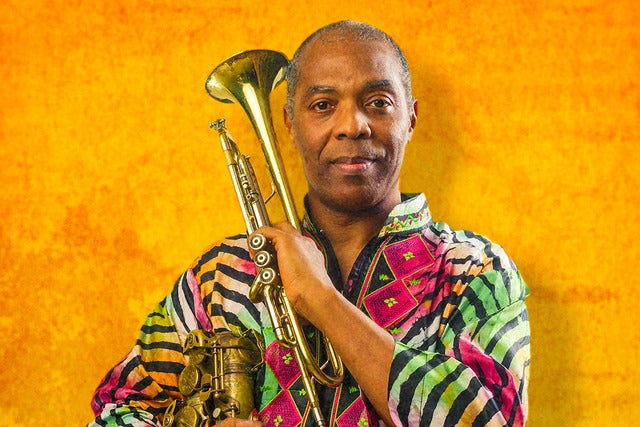
Those who have followed his career and have experienced his music know this for a fact: Femi Kuti never felt just satisfied with being the King's heir. He freed himself from his father's legacy in '85 by putting together his own band, The Positive Force, and thereby working to find his own voice. He became, during the '90s, a renowned artist in his own right with a distinctive, colorful and balanced style.
His records tell the story: After a short spell at Motown, he took
on the Afrobeat sound with his first international album in 1998 («Shoki
Shoki»), before rubbing shoulders with the modern urban style of his American
peers such as Mos Def and Common on the album «Fight To Win».
Returning to Lagos
he worked on rebuilding the new Shrine and released an unbelievable live
project recorded in the heat of the moment in his own venue («Live at the
Shrine», MK2 / 2004).
Finally his first studio record only came about in 2008, having found
inspiration in Paris.
This unanimously celebrated release («Day By Day») was his most successful one.
What was there left for him to accomplish from now on? To complete
the cycle, Femi felt he needed to go back to his roots, to the origins of this
burning feeling inside him which had fired all his work, and going back to the
studio where he had produced his first recordings with his father and his solo
album «Shoki Shoki».
Decca Studio, soon to become Afrodisia Records in the '70s, was the
experimenting ground for most Nigerian masterpieces of the time, including
those of Fela. «It was a very important historical place for Afrobeat and the
place have those mystical vibrations that Femi felt», recalls Sodi, his
longtime travelling buddy, and Parisian producer, who made the trip to Lagos to be a part of it.
«We knew the studio was in a bad state, with old mixing desks, ancient
equipment, we all knew the gear would not be up to the test, but we wanted to
take up the challenge. Because everyting is different in Lagos. The city is such a monster; it has an effect
on the way musicians play. The trick is to capture the Lagos stress without yielding under it
yourself». And Femi gives us further insight : « Between the power cuts and the
dysfunctional AC, we were sweating like pigs. I was playing with Sodi, pretending
to complain: We could be in a comfortable place right now, what are we doing
here? It was madness, but that's what we wanted it to be».
This record may be less carefully produced than the former one. However this was not unintentional, but rather a conscious artistic choice, i.e. not to polish the finishing touches and keep this afrobeat rough in its purest form..... « Aggressive is the word that Femi uses the most when talking about the album. This familiar Punk energy you hear is no surprise therefore even spiced up the African way! Here, the words echo the music perfectly. « Bad Government ». Never has Femi been so vindictive. Or his words so concise. « Nobody Beg »: « But never has my people's condition been so serious» he justifies. As did his idols from the 60s, Coltrane, Parker, Gillespie, his militant spirit sometimes carries a jazzy jab that doesn't however lose any of its intensity. « Politics in Africa ».
More than just a simple musician, the 48-year old composer has become a true African Ambassador, in its most honorable sense. Indeed the album recording had to be arranged around his busy schedule. For example, Femi was in Johannesburg to sing for Africa the opening ceremony for the Football World Cup. There he sang one of his hits « Beng Beng Beng », and took the opportunity to meet a few of the anti-Apartheid heroes. Shortly after, he was heading off to New York to see the famous and very successful Broadway musical about Fela, where he also got to appear on stage, invited by the actors at the end of the show. «It's truly extraordinary, they really understood my father's struggle and his mindset This show has got to travel the world, and come down to the Shrine», he says naturally.
Will we see Femi carrying out this project throughout the world? Maybe. In the meantime, his Shrine still carries the torch week in week out, so much so it has become one of the only last dynamic temples for live African music. Erykah Badu, Damon Albarn, Hugh Masekala have recently made appearances, as have the Lagos Police, who regularly raid the place, picking up and frightening off the local crowd, as they try to close down this highly regarded resistance venue.
There were plenty of seating at The Mann. Three people would have come had you not said there were no seats.
One of the most fun and politically engaged dance parties I've ever been privileged to attend! Part of the joy was watching Femi engage in handing the reigns over to his son, Made. They played a note(s) that sent shivers down my spine... but even better Made Kuti's music was original and funky and I can't wait for more!
Event location @9:30 Club only put 7 pm timing on tickets and online. Showed at 7:45 and by 9 still no acts - nothing. Just a full venue of bored people! Brought my African born teens and we left - lost $140 and lots of excuses. Worst experience ever - and I’ve seen him twice before.
The bad first..Jahsonic never showed. So a lot of us were there at 7 expecting him and he never showed. For two hours we sat around. Very disappointing when we received no apology or explanation. Femi himself was outstanding. He put on the show. He had us engaged and had so much energy. The vibe was amazing. Worth every penny and more.
Femi Kuti and his son, and band, and dancers, the whole event, all, were so entertaining. Getting out to see them was such a good time. Irregardless of COVID, they put on the best show I’ve seen in years.
Femi Kuti always brings his A-game when he plays live. His band, The Positive Force, are impossibly tight and powerful musicians. If you find out Femi is coming to your town, you don't ask yourself if you should go see him play, you just go.
The best performance you can watch anytime any day ,been watching him live since 2000 when the new African shrine was built so doubt about his live performance ,he travels with all his band members not just playing to Dj music
Femi was great! Musicians and dancers were amazing.
Synthesis of incredible music and dance. . . authentic and beautiful. . .get close seats for this one. . .it's great musicianship and a visual spectacle. Thanks to the Ludlow Garage for bringing him to Cincinnati. Please bring him back!!!!!
I consider it a privilege to watch Femi anytime he is in town. Great performer/singer/activist. The energy on stage was infectious.