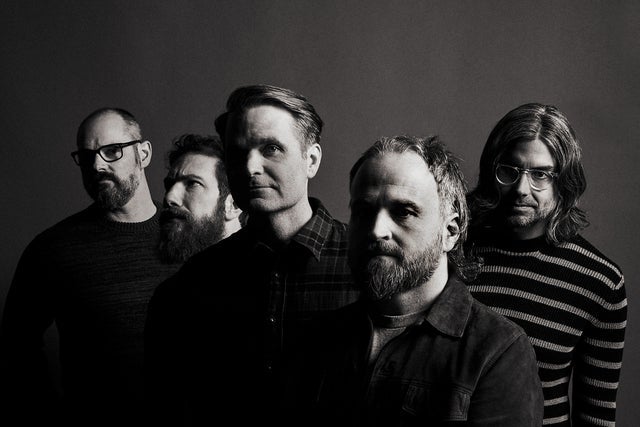
Short Biography
In 1997, an engineering student from Bellingham, WA, named Ben Gibbard recorded a cassette tape of nine songs, entitling the work You Can Play These Songs With Chords. The cassette was a large underground hit, so Gibbard decided to form a band with guitarist/organist Christopher Walla, drummer Nathan Good (later replaced by Michael Schorr) and bassist Nick Harmer. The group named themselves Death Cab for Cutie (in reference to a song performed by the Bonzo Dog Doo Dah Band in the Beatles' Magical Mystery Tour film) and, in 1998, they released their first indie debut LP, Something About Airplanes. Within the next five years, they went on to release three full length independent albums a...
See More
Short Biography
In 1997, an engineering student from Bellingham, WA, named Ben Gibbard recorded a cassette tape of nine songs, entitling the work You Can Play These Songs With Chords. The cassette was a large underground hit, so Gibbard decided to form a band with guitarist/organist Christopher Walla, drummer Nathan Good (later replaced by Michael Schorr) and bassist Nick Harmer. The group named themselves Death Cab for Cutie (in reference to a song performed by the Bonzo Dog Doo Dah Band in the Beatles' Magical Mystery Tour film) and, in 1998, they released their first indie debut LP, Something About Airplanes. Within the next five years, they went on to release three full length independent albums and an EP, the most highly acclaimed being 2003's Transatlanticism (at which time they were also joined by percussionist Jason McGerr). After the huge success of Transatlanticism (which contained the acclaimed songs "The New Year" and "The Sound of Settling") Death Cab's popularity spread like wildfire. They toured Japan and Australia, found themselves on numerous magazine covers and were featured on the hit TV show The OC. In 2004, they signed with Atlantic records and released their major label debut album, Plans, which entered the US charts at number 4 and features the single "Soul Meets Body." DCFC have clearly established themselves as one of the most successful indie pop-rock bands of the late '90s and ‘00s, helping to bring to the fore the once underground indie sound.
Similar Artists:
Modest Mouse, Pedro the Lion, Elliot Smith, Sunny Day Real Estate, Postal Service
In-depth Biography
Death Cab for Cutie's rise from small-time solo project to emotive, Grammy-nominated rock quartet is one of indie rock's greatest success stories. Launched in the bayside college town of Bellingham, WA, the group was originally a side project for singer/guitarist Ben Gibbard, an engineering student at Western Washington University who split his time between school and music. Taking a break from his local power pop band, Pinwheel, Gibbard began recording an album's worth of solo material in the summer of 1997. Producer Chris Walla lent his help to the recording sessions, which soon produced an eight-song cassette entitled You Can Play These Songs with Chords. When the tape proved to be a local hit, Gibbard reached into his circle of friends to assemble a band, hoping to play the new songs live. Bassist Nick Harmer (Gibbard's roommate) and drummer Nathan Good quickly climbed aboard, while Walla enlisted as the band's primary guitarist (he would also go on to produce most of the band's future releases). With a lineup now in place, Gibbard's group rechristened itself Death Cab for Cutie (named after a song by the Bonzo Dog Doo Dah Band) and signed a contract with the Seattle-based Barsuk Records within a year's time.
The quartet made its studio debut with 1998's Something About Airplanes, an album that featured several re-recorded tracks from the You Can Play These Songs with Chords cassette as well as a dreamy, pop-oriented sound reminiscent of Built to Spill. Although both Gibbard and Walla continued to pursue their own projects (including Gibbard's successful stint with the Postal Service), Death Cab for Cutie continued to rise in popularity, and the follow-up effort We Have the Facts and We're Voting Yes was issued in 2000. Nathan Good exited the group just prior to the album's completion, and We Have the Facts introduced Michael Schorr as Death Cab's new drummer. The Forbidden Love EP arrived that same year, while a third full-length effort, The Photo Album, was released in 2001. By this time, a sizable audience had gathered around the band's emotional music, and Barsuk re-released You Can Play These Songs with Chords in 2002 with ten additional songs. The polished, hook-laden Transatlanticism arrived the following year and announced the arrival of drummer Jason McGerr, who had previously played in a band with Nick Harmer before Death Cab's formation.
The album also proved to be a very important step in the band's career, gathering positive attention from consumers and industry execs (including television producer Josh Schwartz, who prominently featured the band's music throughout several seasons of The O.C.). With their popularity at an all-time high, the bandmates issued a live disc, The John Byrd E.P., and later signed a worldwide major-label deal with Atlantic Records in November 2004. Plans was released the following summer and debuted at number four, remaining on the Billboard charts for nearly one year and achieving gold status on the strength of three singles (including the acoustic ballad "I Will Follow You into the Dark"). Death Cab for Cutie graced the cover of Spin Magazine, appeared on an episode of Saturday Night Live, and earned a Grammy nomination for their major-label debut. Work on a follow-up album coincided with the release of Chris Walla's solo effort, the politically minded Field Manual, and Death Cab returned in May 2008 with Narrow Stairs. ~ Andrew Leahey, All Music Guide
See Less